The Life Preserver Drone is transforming how emergency teams respond to people in distress in open water. Traditional rescue methods depend on human swimmers, thrown flotation devices, or boats. These approaches often face delays caused by distance, currents, weather, and physical limits. The Water Rescue Drone addresses these gaps by combining rapid aerial delivery with immediate flotation support.
This article examines the design, operation, advantages, real-world uses, technical details, challenges, and future potential of the Life Preserver Drone. It explains why this technology is becoming a practical tool for beaches, coastal rescue units, and disaster response teams.
What Makes a Life Preserver Drone Different?
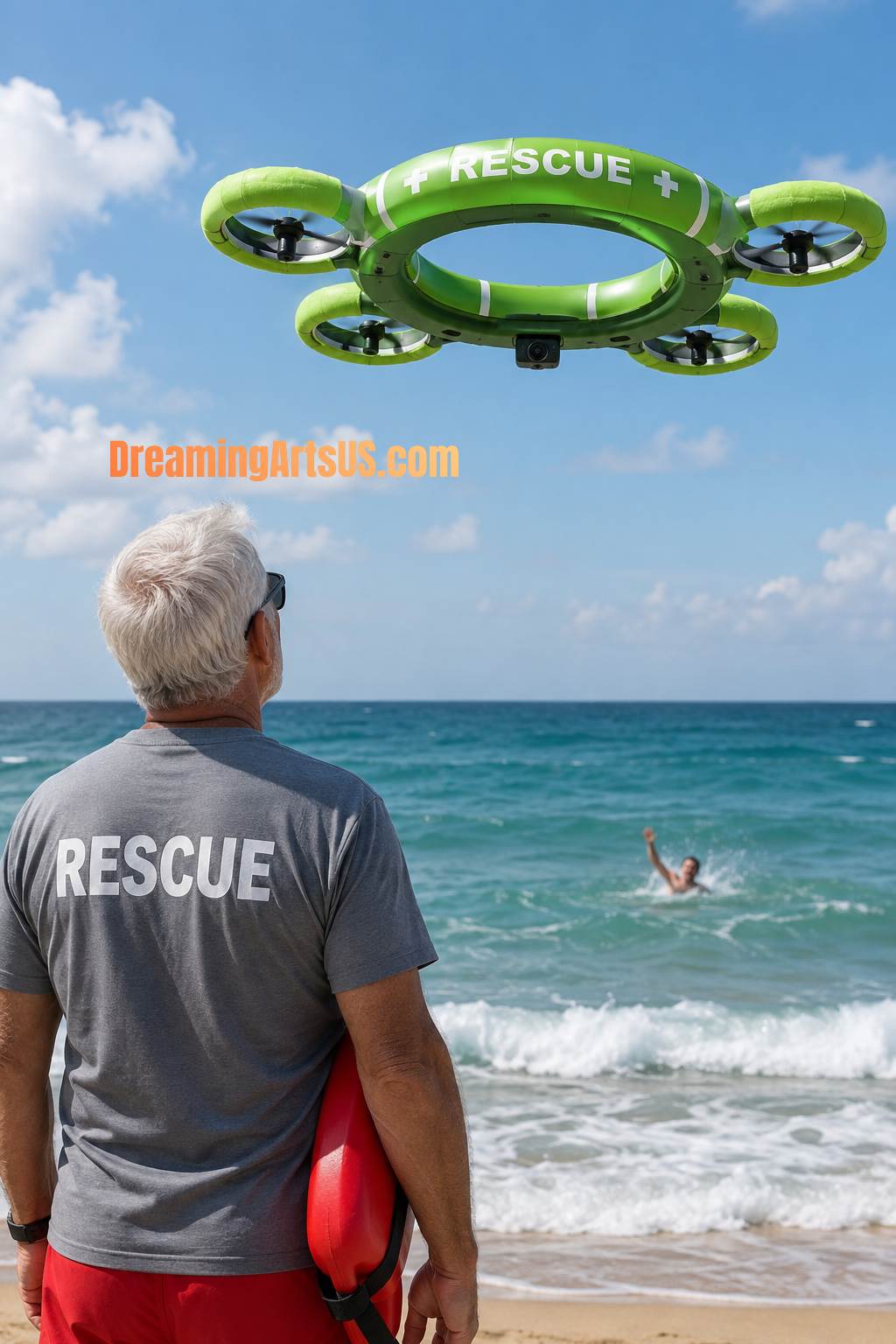
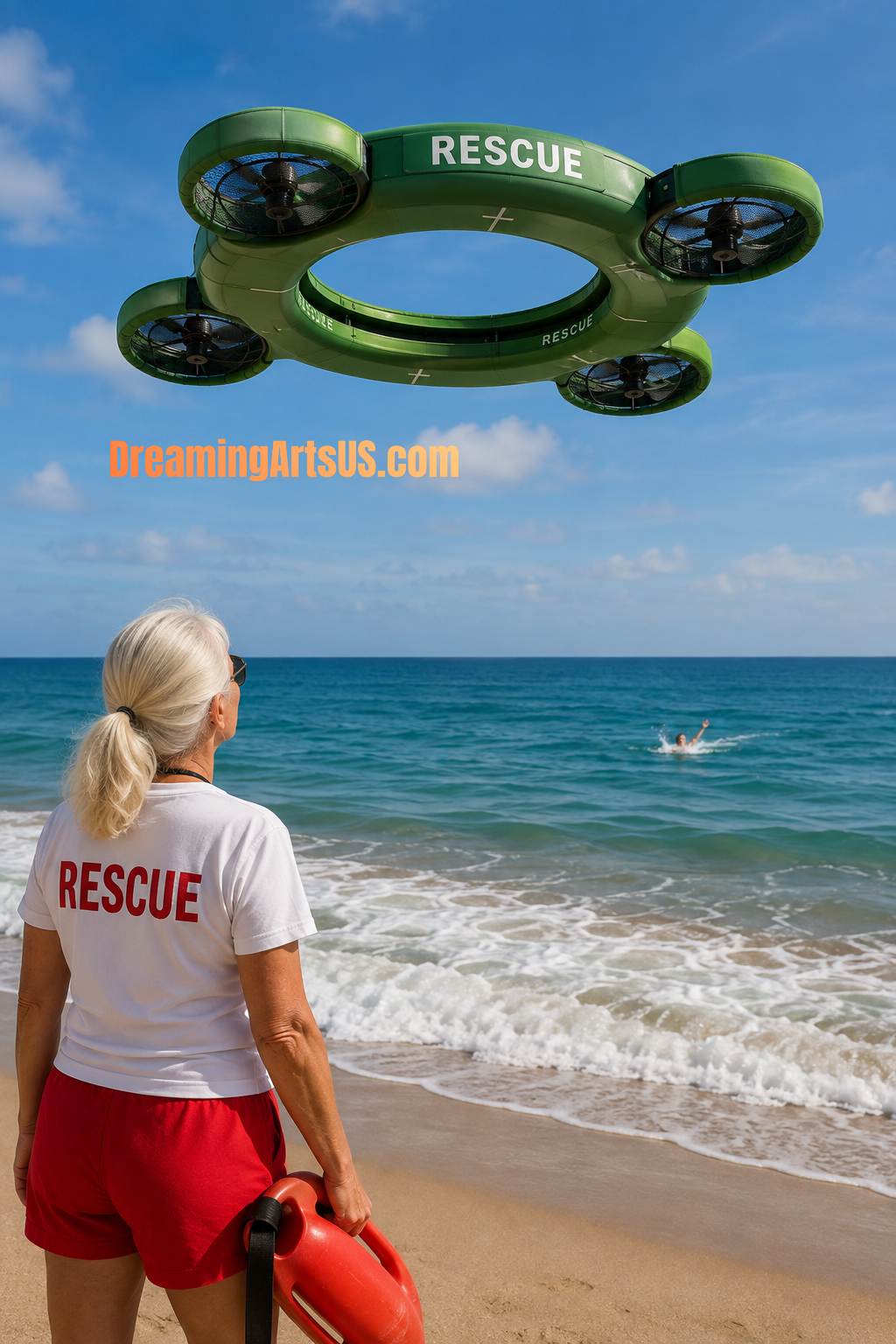
A Water Rescue Drone is an unmanned aircraft built in the shape of a life ring or buoy. It flies to a person in trouble and then functions as a floating support device once it reaches the water. The design allows it to travel faster than a swimmer or boat while still providing the buoyancy of a conventional life preserver.
Typical features of a Life Preserver Drone include:
- A buoyant circular frame made of foam or sealed composite material
- Multiple electric rotors for stable flight and hovering
- Waterproof motors and electronics
- High-visibility colors such as orange or green
- Clear “RESCUE” markings
- Cameras or sensors for navigation and monitoring
- Optional lights for night operations
The dual ability to fly and float is the core innovation of the Water Rescue Drone. It can cover distances of several hundred meters in under a minute and then remain on the surface to support the person until human help arrives.
How the Life Preserver Drone Operates in Practice
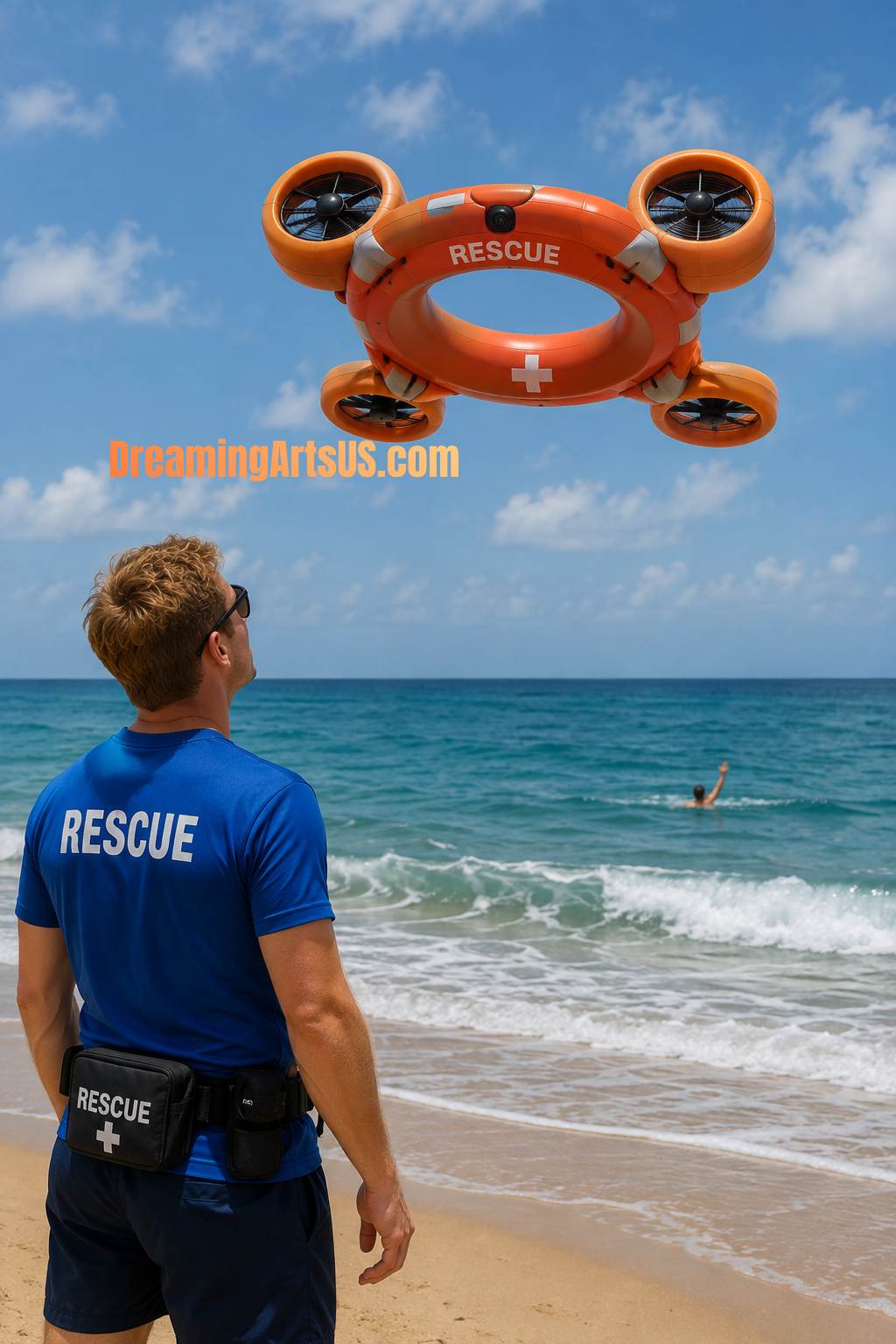
The operational sequence of a Water Rescue Drone is straightforward. A lifeguard or operator spots a person in difficulty and launches the device. Using GPS, visual cameras, or thermal imaging, the Life Preserver Drone flies toward the target. Once overhead, it descends and settles onto the water close to the individual.
The person can then grab the buoyant ring. Some models of the Water Rescue Drone include voice prompts or simple visual signals that guide the victim. In advanced versions, the operator can remotely control surface movement to help tow the person toward safer water.
Main steps in a typical mission:
- Detection of distress
- Launch and flight path planning
- Approach and precise positioning
- Controlled water landing
- Flotation support
- Monitoring until rescuers reach the scene
This process keeps the initial response fast while reducing the immediate risk to human rescuers.
Core Advantages of the Life Preserver Drone
The Water Rescue Drone delivers several practical benefits that improve rescue outcomes.
Speed of response
A Life Preserver Drone can reach a person far offshore much faster than a swimmer or most boats. In many nearshore cases the device arrives in less than 60 seconds.
Lower risk for rescuers
By sending the Water Rescue Drone first, teams can stabilize the situation before a human enters the water. This is especially valuable in strong currents or rough conditions.
Precision placement
Cameras and GPS allow the Life Preserver Drone to deliver flotation exactly where it is needed, even when wind or waves make accurate throwing difficult.
Weather tolerance
Many models of the Water Rescue Drone continue to function in moderate wind and waves that would delay traditional methods.
Efficient coverage
One Life Preserver Drone can support a large stretch of beach and perform repeated missions with quick battery changes.
Find related products to buy: Click here
Additional practical gains include continuous video recording for later review, reduced need for constant boat patrols, and the ability to operate in areas with limited staff.
Design and Engineering Considerations
Building a reliable Water Rescue Drone requires balancing flight performance with flotation and durability. The frame must stay buoyant even if power is lost. Rotors are usually protected by ducts to reduce the chance of injury and to keep the device from becoming entangled.
Batteries are designed for rapid replacement so the Life Preserver Drone can return to service quickly. Waterproofing standards are high because the unit will repeatedly enter saltwater. Navigation systems typically combine GPS for long-range flight with optical sensors for accurate low-altitude hovering over moving water.
Key engineering priorities for a Water Rescue Drone:
- Sufficient buoyancy for at least one adult
- Stable hover capability in wind
- Redundant motors where possible
- Easy cleaning and maintenance after saltwater use
- Clear visual identification from a distance
These elements ensure the Life Preserver Drone remains functional under real rescue conditions.
Practical Applications Across Environments
The Water Rescue Drone is useful in a range of settings.
Supervised beaches
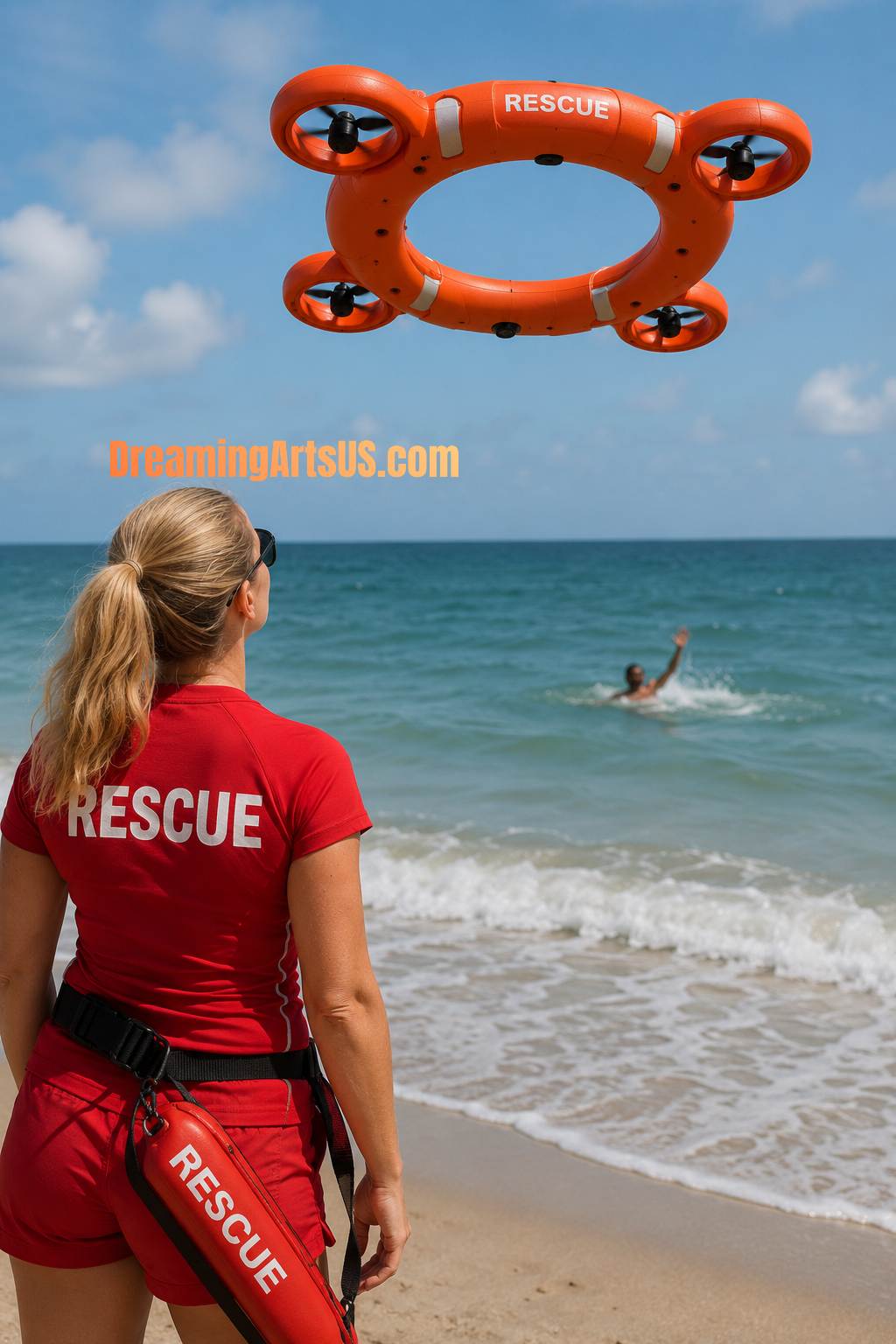
Lifeguards keep a Life Preserver Drone ready at the tower and launch it the moment a swimmer shows signs of distress. The device provides immediate flotation while a rescue swimmer prepares.
Coastal search and rescue
Teams use the Water Rescue Drone to cover long stretches of shoreline more quickly than boats alone. It can serve as a first contact point and a visual marker for arriving vessels.
Flood emergencies
During urban flooding the Life Preserver Drone can deliver flotation to people trapped in vehicles or on elevated surfaces before larger boats can reach them.
Offshore and commercial operations
Ships and platforms can carry a Water Rescue Drone for rapid response to man-overboard incidents, especially at night or in poor visibility.
Sporting events
Open-water races and triathlons benefit from having a Life Preserver Drone on standby to support participants who tire or encounter problems.
In each case the Water Rescue Drone fills the critical gap between the moment of detection and the arrival of human rescuers.
Comparison with Conventional Rescue Tools
Thrown life rings depend on accurate aim and favorable conditions. Rescue tubes require a strong swimmer to reach the victim. Boats need time to launch and operate safely. Helicopters are powerful but expensive and often delayed.
The Water Rescue Drone combines the flotation of a life ring with the speed and reach of an aircraft. It arrives faster than most boats and can place support more accurately than a thrown device. It does not replace trained personnel, but it gives them a stronger first-response option.
Training Requirements for Effective Use
Operators of a Life Preserver Drone need structured training that covers launch procedures, flight control, water-landing techniques, and emergency recovery. Practice drills in varied sea conditions help build confidence and skill.
Standard operational protocols include:
- Pre-flight system and battery checks
- Clear communication with the wider rescue team
- Defined flight paths that avoid crowds
- Immediate post-mission inspection and rinsing
- Regular software and hardware maintenance
When these practices are followed, the Water Rescue Drone integrates smoothly into existing emergency plans.
Current Challenges and Limitations
The Life Preserver Drone is not without constraints. Flight time is typically limited to 15–30 minutes depending on conditions and payload. Strong winds or heavy rain can reduce performance. Saltwater exposure demands consistent cleaning and inspection. Regulatory rules for unmanned aircraft over water and near people also require careful attention.
Other practical issues include:
- Potential propeller contact if the device lands too close to a person
- Need for reliable radio links over open water
- Training time for new operators
- Upfront cost of higher-end sensor packages
- Public unfamiliarity that can cause hesitation during a real incident
Manufacturers continue to improve designs and materials to reduce these limitations over time.
Future Directions for the Technology
Next-generation versions of the Life Preserver Drone are expected to offer longer endurance, greater autonomy, and expanded capabilities. Artificial intelligence may enable automatic detection of drowning behavior. Swarm coordination could allow several units to work together on larger incidents. Hybrid systems that combine rotors with limited surface propulsion are also under development.
Other likely advances include:
- Integrated speakers for verbal guidance
- Improved thermal imaging for night and low-visibility work
- Lighter medical payloads such as compact rafts or signaling devices
- Better battery systems that extend readiness periods
As these improvements arrive, the Water Rescue Drone will become even more capable and widely adopted.
Global Interest and Early Adoption
Coastal regions with high tourism and active rescue services have shown strong interest in the Life Preserver Drone. Early pilot programs have reported shorter response times and positive feedback from operators. As production increases and costs decrease, smaller communities and developing coastal areas are expected to gain access to the technology.
Discover comparable items here: Click here
Typical Performance Characteristics
While specifications vary, a representative Water Rescue Drone offers flight times of roughly 20 minutes, speeds suitable for rapid nearshore response, buoyancy for one adult, and waterproofing adequate for repeated saltwater use. Camera systems support identification and monitoring at useful ranges, and control links remain reliable under normal operating conditions.
These performance levels continue to improve with each new generation of the technology.
Built-in Safety Measures
Modern designs emphasize safety for both the person in the water and nearby bystanders. Ducted propellers reduce injury risk. Automatic return functions activate if the control signal is lost. Soft-landing software helps the Life Preserver Drone settle gently on the surface. High-visibility markings and optional lighting improve recognition in daylight and darkness.
Additional protective features include geofencing to keep flights within approved areas and dual-control options for critical missions.
The Water Rescue Drone has moved from concept to practical tool. It delivers flotation faster and with less immediate risk than many traditional methods, giving both victims and rescue teams a stronger chance of a successful outcome. Continued progress in design, training, regulation, and public awareness will allow the Life Preserver Drone to become a standard element of modern water safety systems.
Communities that adopt the technology thoughtfully will be better equipped to protect lives along their shorelines and in other aquatic environments. The ability of the Water Rescue Drone to combine rapid flight with reliable flotation positions it as one of the most useful innovations currently available for water rescue.