
The year 2026 is ushering in some of the boldest, most imaginative interior concepts the design world has ever seen, and none have captured attention quite like aquarium kitchen floors. This breathtaking idea transforms the heart of your home into a living underwater landscape, blending architecture, engineering, and art into one unforgettable experience. What was once a niche luxury concept has now evolved into a fast-growing trend, inspiring homeowners worldwide to rethink how kitchen spaces can be both functional and emotionally immersive.
As consumers lean toward personalized living spaces, Aquarium Kitchen Flooring are redefining what it means to make a visual statement. These floors are not just creative—they’re a conversation starter, a calming natural feature, and a piece of high-end design that elevates your kitchen into an aquatic escape. Whether you prefer a serene Japanese-inspired reef or a vibrant tropical scene, this trend offers endless customization without compromising durability or utility.
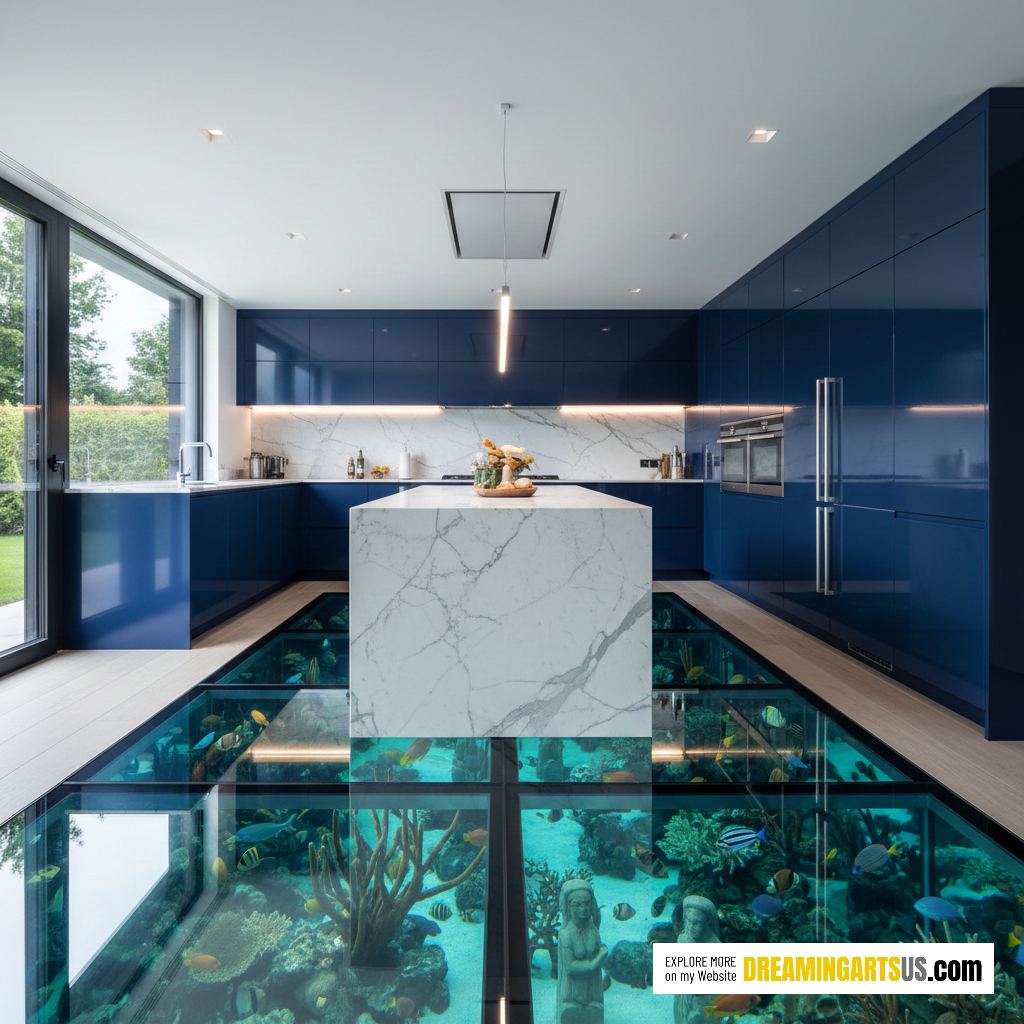
Why Aquarium Kitchen Floors Are Taking Over in 2026?
The popularity of aquarium kitchen floors is rooted in a broader shift toward experiential design. Homeowners are no longer satisfied with traditional materials alone—they want jaw-dropping elements that blur the line between art and architecture. An aquarium floor delivers exactly that, creating a dynamic environment that changes with light, movement, and natural aquatic behaviors.
In 2026, “immersive living” is more than a buzzword. People crave calming, nature-driven features in their homes, especially in rooms like the kitchen where families gather every day. Aquarium flooring offers a multi-sensory escape—soft light refractions, soothing colors, and gentle aquatic motion create a meditative backdrop for cooking, dining, or entertaining.
The rise of smart-home systems has also contributed to this trend. Modern aquarium floors can integrate LED ecosystems, automated filtration, and app-controlled lighting schemes, making them not only stunning but surprisingly low-maintenance and energy efficient.
Links to purchase similar products: Click here
How Aquarium Kitchen Floors Are Designed
While they may appear ethereal and delicate, aquarium kitchen floors are engineered with exceptional strength. Most systems use multi-layered tempered glass, reinforced acrylic panels, or hybrid materials capable of supporting thousands of pounds. These panels are sealed with industrial-grade waterproofing to ensure complete structural stability.
The base of the floor is built around a shallow or mid-depth aquatic tank. Designers can include coral reefs, sculptural elements, mermaid statues, LED lighting, live plants, and various species of fish depending on the homeowner’s vision. The tank layout is divided into sections beneath the walking surface to simplify cleaning and avoid stress for aquatic life.
In 2026, advances in 3D immersive floor technology have also influenced the trend. For homeowners who want the appearance of depth without caring for live creatures, hyper-realistic resin ecosystems are growing in popularity. These allow the same dramatic underwater look without requiring special filtration systems.
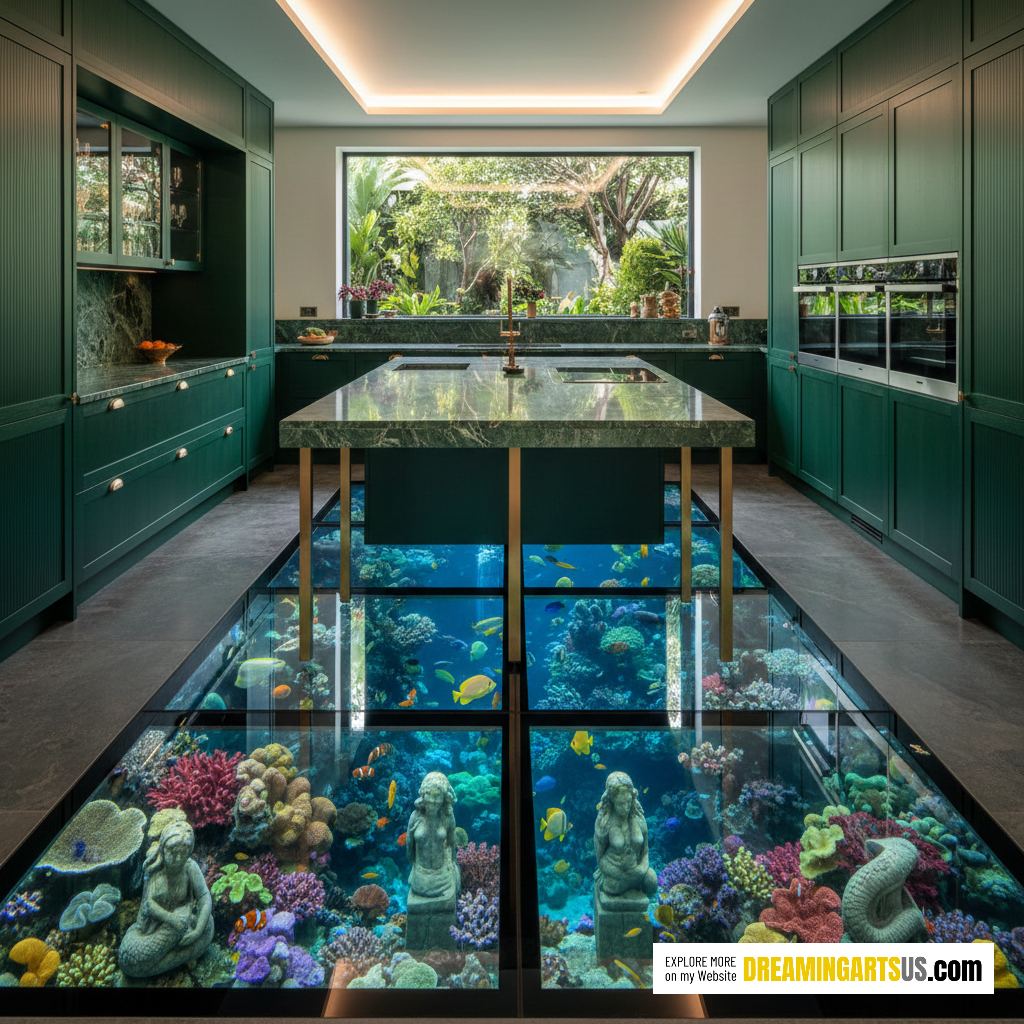
Types of Aquarium Kitchen Floors You Can Choose
The design possibilities are nearly endless, and each style offers a unique personality to the space. Here are the top variations shaping the 2026 trend:
1. Full-Length Aquarium Floors
These floors stretch across the entire kitchen, turning the space into an underwater gallery. They create maximum visual impact and allow for large, beautiful aquascapes filled with vibrant marine life.
2. Island-Centered Aquarium Floors
A popular choice in luxury homes, this design places the aquarium directly under the kitchen island. It becomes a dramatic focal point while keeping installation more contained and manageable.
3. Sectional Aquarium Floors
Instead of one large tank, sectional designs use multiple smaller aquariums arranged in a grid. This approach enhances stability and allows for varied ecosystems in each section.
4. Artificial Aquarium Floors
For homeowners who love the aesthetic but not the maintenance, artificial floors—featuring coral sculptures, 3D resin oceans, and non-living décor—offer a realistic alternative.
5. Minimalist Clear-Water Floors
These feature clean lines, white sand, and minimal décor for a spa-like, calming effect. They pair beautifully with modern and Scandinavian kitchens.
Benefits That Make Aquarium Kitchen Floors Worth the Investment
The visual impact is undeniable, but the benefits of aquarium kitchen floors go even further.
1. A Unique Luxury Aesthetic
No other flooring option creates an immersive environment quite like this. It instantly elevates your kitchen into a high-end, magazine-worthy masterpiece.
2. Emotional and Wellness Appeal
Aquariums reduce stress, improve mood, and provide natural calming effects. Having this built into your home creates a serene and soothing atmosphere you can enjoy every day.
3. Highly Customizable
From coral colors to LED lighting tones to aquatic species, the floor can be tailored to your artistic vision. You choose whether it feels tropical, mystical, or minimalist.
4. Extremely Durable Construction
Tempered glass and reinforced acrylic are engineered to withstand massive weight and resist scratches. These floors are built to last decades.
5. Boosts Property Value
Buyers are increasingly drawn to unique luxury features. Homes with aquarium kitchen floors stand out in a competitive real estate market and often command higher prices.
What Materials Are Used in Aquarium Kitchen Floors?
A combination of high-strength materials ensures safety and durability while keeping the design visually transparent. The most common include:
Tempered Glass Panels
Engineered to withstand heavy loads, tempered glass provides crystal clarity with exceptional impact resistance. Most installations use three to five layers.
Acrylic Reinforced Panels
Acrylic is lighter than glass and offers excellent optical clarity. It’s often used for deeper installations or curved flooring designs.
Polycarbonate Structures
Used in some 2026 innovations, polycarbonate is known for its shatter resistance and flexibility, ideal for custom shapes.
Marine-Grade Sealants
Industrial waterproofing sealants ensure no water escapes the tank and no external moisture penetrates the ecosystem.
Steel or Concrete Framing
The floor’s frame must support the combined weight of water, materials, and glass. High-grade steel and load-bearing concrete are commonly used for reinforcement.
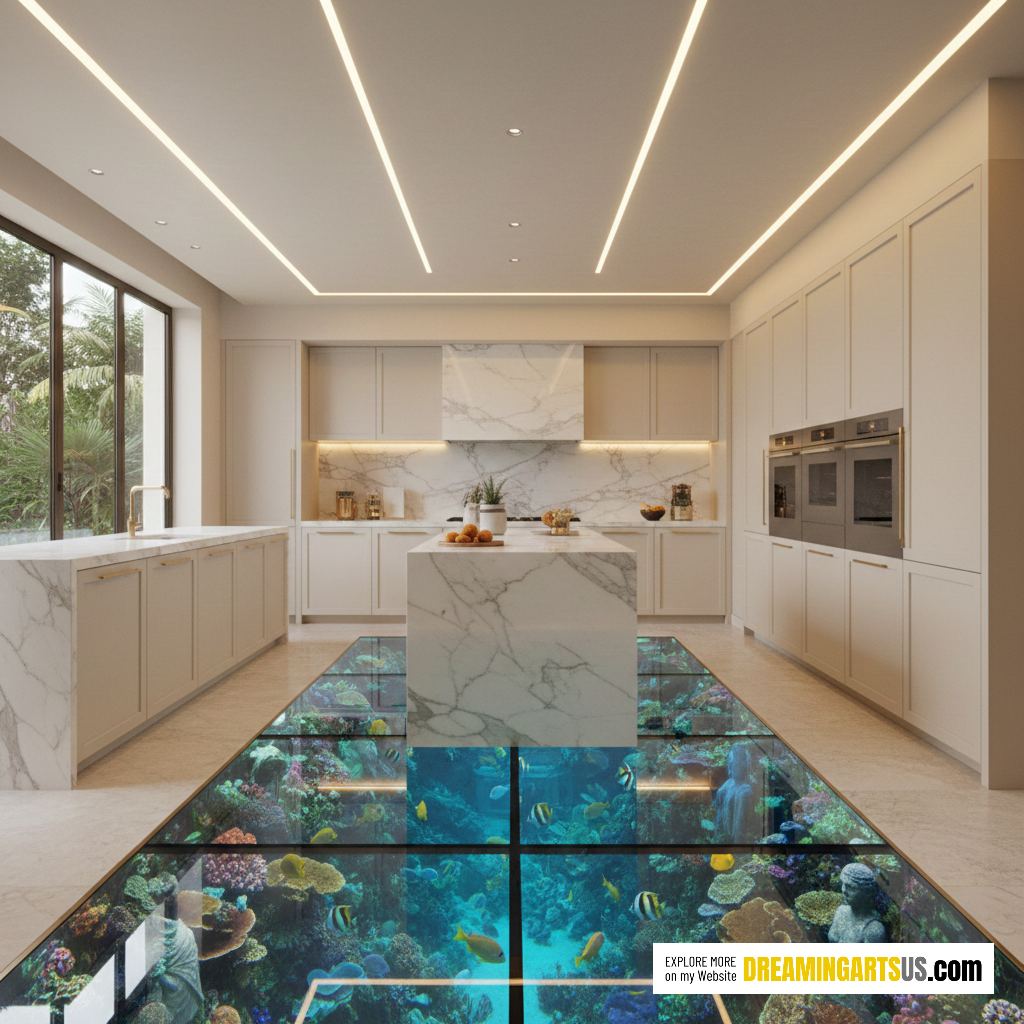
Installation Process: How These Floors Are Built
Although each project is highly customized, the installation of aquarium kitchen floors generally follows these steps:
Step 1: Structural Evaluation
Professionals assess whether your home’s foundation can support the weight. Reinforcement is added if necessary.
Step 2: Designing the Ecosystem
This includes selecting the type of fish, coral, décor, lighting, and layout of the panels.
Step 3: Building the Tank Base
The tank is assembled with reinforced walls and waterproof seals.
Step 4: Installing the Glass Panels
Multi-layered tempered glass is placed over the tank and secured with load-bearing framing.
Step 5: Ecosystem Setup
Filtration systems, water cycling, live rocks, coral, and aquatic species are added.
Step 6: Final Integration and Testing
The system is tested for leaks, pressure resistance, electrical safety, and clarity.
Maintenance Requirements Every Homeowner Should Know
Despite their luxurious appeal, Aquarium Kitchen Flooring are designed for low-maintenance living thanks to modern filtration systems. However, regular care ensures the ecosystem stays vibrant.
Daily
-
Check fish health
-
Ensure lighting cycles are working
-
Confirm temperature stability
Weekly
-
Clean the glass surface
-
Test water levels
-
Remove debris
Monthly
-
Replace filtration components
-
Inspect seals
-
Clean LED strips or decorative sculptures
Safety Considerations in 2026 Designs
Safety remains the core priority in modern aquarium flooring. Today’s systems meet stringent engineering standards and use materials that prevent cracks, shattering, or pressure damage.
1. Non-Slip Glass
Frosted or matte finishes on the walking surface help avoid slipping, even in wet environments.
2. Multi-Layer Reinforcement
Even if one layer were compromised, the remaining layers continue supporting full weight.
3. LED Heat Management
Modern LED strips produce minimal heat, preventing temperature fluctuations in aquatic environments.
4. Load Testing
Floors are tested to support the weight of large appliances, heavy furniture, and daily use.

Cost of Aquarium Kitchen Floors in 2026
The price varies greatly based on size, materials, depth, and live elements. On average:
Standard installations:
$35,000 – $70,000
Mid-range custom designs:
$75,000 – $120,000
Full-length luxury floors with advanced ecosystems:
$150,000 – $300,000+
Although it’s a significant investment, the long-term durability and visual impact justify the cost for many luxury homeowners.
Link to buy similar products: Click here
Design Inspirations for Modern Homes
The design world is pushing the limits of creativity with aquarium kitchen floors. Here are a few inspiring concepts trending in 2026:
Tropical Reef Floors
Featuring colorful corals, clownfish, and anemones, these floors add energy and vibrancy to bright modern kitchens.
Mermaid Sculpture Themes
Statues and underwater architectural elements create an enchanted, mythical atmosphere.
Minimalist Blue Lagoon Floors
Soft blue tones, white sand, and subtle lighting create a peaceful spa-like setting.
Dark-Water Amazon Floors
Using darker substrates and exotic fish species, these floors pair beautifully with rich wood cabinetry.
LED-Choreographed Lighting Floors
Programmable lighting cycles create sunrises, moonlight, or glowing reef effects beneath your feet.
Who Should Consider Aquarium Kitchen Floors?
These floors are ideal for homeowners who value creativity, individuality, and artistic expression in their living spaces. They’re also perfect for people who want:
-
A dramatic kitchen centerpiece
-
A calming, nature-inspired environment
-
A luxury home feature not seen in most properties
-
A personalized design that reflects their love for oceans or aquatic art
Do Aquarium Kitchen Floors Affect Home Value?
Absolutely. Luxury buyers in 2026 are more focused than ever on custom designs and standout features. Homes with aquarium kitchen floors tend to leave a lasting impression, often resulting in:
-
Higher appraisal values
-
Faster market interest
-
Strong emotional appeal in showings
A well-maintained aquarium floor becomes an unforgettable selling point.
FAQs About Aquarium Kitchen Floors
1. Are aquarium kitchen flooring safe to walk on?
Yes. They are built with multi-layered tempered glass capable of supporting several tons of weight.
2. Can I choose the types of fish and décor?
Absolutely. These floors are fully customizable to your taste, from vibrant reefs to minimalist Zen-inspired tanks.
3. What happens if a panel gets scratched?
Scratches are rare due to reinforced surfaces, but panels can be repaired or replaced if needed.
4. Do aquarium floors require a lot of energy?
Modern systems use energy-efficient LED lighting and low-power filtration systems, keeping energy consumption moderate.
5. Can I install aquarium floors in an existing kitchen?
Yes, but structural reinforcement may be required. New builds offer more flexibility for deeper or larger installations.
The rise of aquarium kitchen floors marks a new era of immersive home design. It’s a bold fusion of engineering and beauty that turns everyday living into a visual journey. With advances in materials, energy-efficient technology, and customizable ecosystems, this trend is here to stay—and it’s only becoming more accessible.
As homeowners continue seeking experiences rather than simple décor, aquarium floors offer a functional art form that transforms kitchens into underwater sanctuaries. They’re more than a floor—they’re a living masterpiece that evolves with time, light, and nature itself.
If you’re ready to bring this extraordinary idea into your home, 2026 is the perfect year to dive in.


