
There’s something truly magical about walking along a path that seems to glow from within — a shimmering trail of polished crystals that reflects both nature’s artistry and your personal energy. A Gemstone Walkway isn’t just a decorative element; it’s a statement of beauty, mindfulness, and harmony with the earth. Each stone carries its own symbolism, its own energy, and when chosen with care, it can transform your outdoor or indoor space into a tranquil, radiant sanctuary.
In this comprehensive guide, we’ll explore what a Walkway Made Of Gemstones is, how it’s made, the meanings behind popular crystals, and how you can select the perfect stones for your own path. Whether you want to bring spiritual balance to your garden or simply create a jaw-dropping feature that sparkles under the sunlight, this is where art and intention meet.

What Is a Gemstone Walkway?
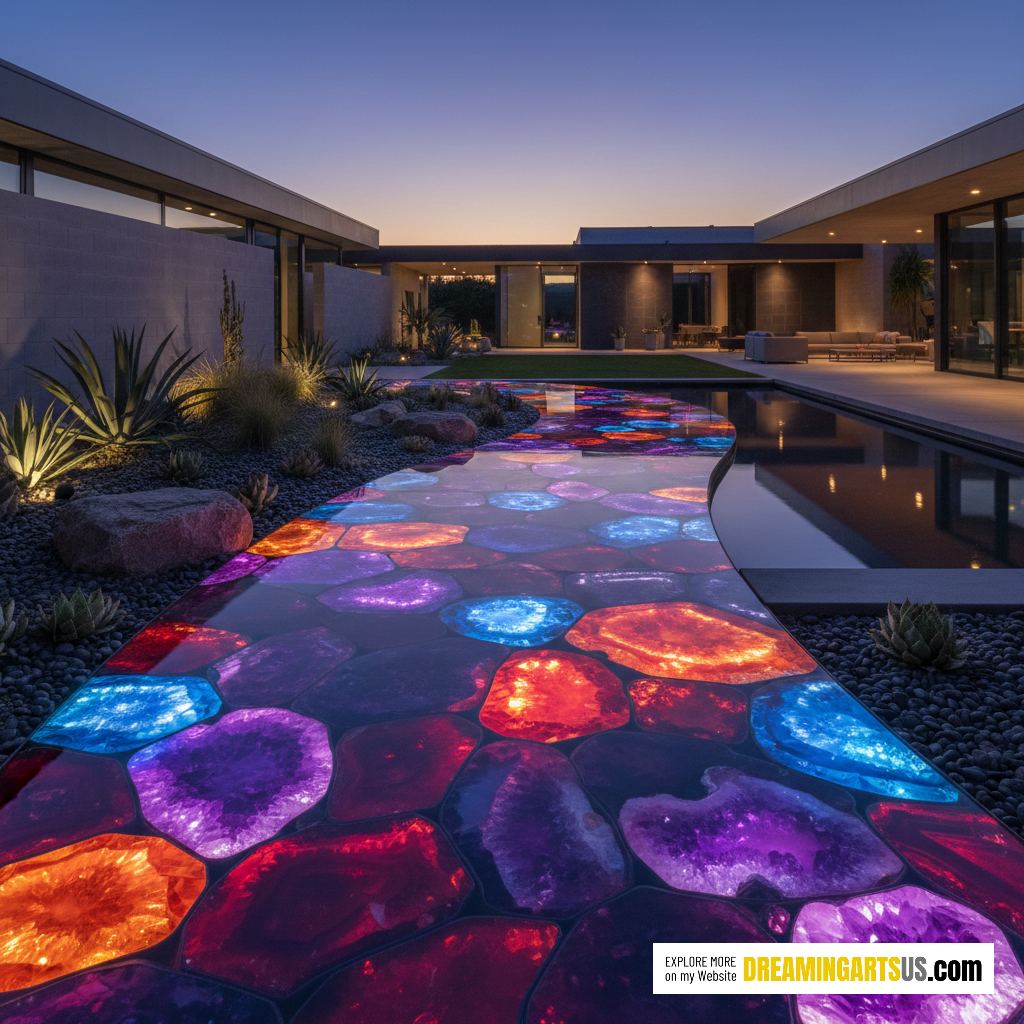
A Gemstone Walkway is an artistic pathway crafted using semi-precious stones, crystals, and minerals set into resin, epoxy, or concrete. Unlike traditional stone paths, which use plain gravel or flagstone, these designs incorporate polished slices of amethyst, agate, quartz, and other gemstones, often illuminated with soft lighting beneath or around them.
When sunlight or evening lights hit the surface, each crystal reveals its depth, color, and natural patterns. The result is a glowing, otherworldly effect that feels like walking over a living piece of the earth’s soul. Many homeowners and designers use these walkways as statement pieces — leading to a front door, around a pool, or through a lush garden.
But beyond their beauty, each gemstone holds symbolic meaning and energy that can influence the feel of your space.
The Symbolism and Energy of Gemstones
The foundation of a Gemstone Walkway is its connection to natural energy. Crystals have been valued for centuries for their metaphysical properties. When arranged along a walkway, these stones can create an energetic flow — guiding balance, positivity, and peace into your home.
Here are some of the most popular gemstones used and their meanings:
-
Amethyst – Known for spiritual protection and calm energy. Perfect for creating a peaceful, meditative path.
-
Agate – Symbolizes balance and harmony. It’s excellent for grounding your space while adding stunning bands of color.
-
Rose Quartz – Promotes love and compassion. Ideal for walkways leading to cozy patios or gardens.
-
Citrine – Associated with abundance and joy. Great for vibrant entrances that welcome prosperity.
-
Blue Chalcedony – Encourages serenity and communication. A beautiful choice near water features or reflective spaces.
-
Obsidian – Offers protection and strength. Works well for modern, bold walkways.
-
Clear Quartz – Amplifies the energy of nearby stones. Often used as the “foundation” crystal for any gemstone design.
Choosing the right combination of crystals for your Gemstone Walkway allows you to align its aesthetic with the emotions and energy you want your home to radiate.

Designing the Perfect Gemstone Walkway
Designing a Walkway Made Of Gemstones involves both artistic creativity and structural planning. Here’s a step-by-step look at the main process:
1. Planning the Path Layout
Before selecting your gemstones, determine where the walkway will be placed. Will it connect your deck to the garden, or lead to your pool? Curved paths create a sense of flow and mystery, while straight paths emphasize formality and order.
2. Choosing the Color Palette
Each gemstone contributes unique colors and light effects. For a cohesive look, select stones that complement your home’s exterior.
-
For modern homes: Try black obsidian, grey agate, and smoky quartz.
-
For tropical gardens: Use amethyst, citrine, and rose quartz for warmth and vibrancy.
-
For Zen or minimalist designs: Combine clear quartz and white agate for a serene glow.
3. Material Integration
The gemstones can be embedded into epoxy resin, concrete, or glass panels. Epoxy is particularly popular for its smooth, glossy surface and ability to showcase each crystal’s detail while protecting it from wear and weather.
4. Lighting the Path
To truly enhance your Gemstone Walkway, integrate LED strips or solar lighting beneath translucent sections. At dusk, your walkway will come alive — glowing softly as if powered by the stones themselves.
5. Finishing Touches
Add small plants, moss, or decorative pebbles between the crystal sections for a natural blend. This helps transition your walkway seamlessly into the landscape.
Links to purchase similar products: Click here
Popular Styles of Gemstone Walkways
Each homeowner’s personality shines through in their walkway design. Here are a few popular styles that are trending among designers and collectors alike:
1. The Amethyst Dream Path
A walkway entirely composed of amethyst slices and violet epoxy resin. Perfect for gardens that emphasize tranquility and luxury. The deep purples look breathtaking at sunset.
2. The Fire Agate Trail
Combining orange and red agates creates a fiery path that radiates warmth. It’s a bold statement for modern homes and resort-style backyards.
3. The Ocean Quartz Walkway
Made with blue chalcedony, aquamarine, and clear quartz. This design pairs beautifully with pools and coastal homes.
4. The Rainbow Crystal Path
A mix of multiple gemstones — citrine, amethyst, rose quartz, turquoise, and obsidian. It’s playful, vibrant, and full of personality.
5. The Mystical Garden Route
Combines raw crystals with greenery, integrating natural moss and ferns between gemstone sections for a fairy-tale look.
Each of these designs not only enhances your landscape but also brings symbolic meaning to every step you take.

Choosing the Right Gemstones for Your Space
Selecting the perfect crystals for your Walkway Made Of Gemstones involves more than just matching colors — it’s about balancing beauty with intention.
1. Consider Your Location
If your walkway is outdoors, choose stones that can withstand weather exposure. Agate and quartz are durable options, while softer stones like calcite may require protective resin.
2. Reflect Your Personality
Each crystal represents a mood or value. For example:
-
Love and warmth: Rose quartz and citrine
-
Strength and grounding: Obsidian and black tourmaline
-
Creativity and clarity: Amethyst and quartz
-
Prosperity and abundance: Green aventurine and pyrite
3. Match the Lighting
Crystals behave differently under sunlight and artificial lighting. Amethyst glows under warm light, while blue chalcedony sparkles more under cool tones. Consider testing samples at different times of day.
4. Balance Texture and Transparency
Mix translucent slices (like agate) with rougher, more organic stones to create contrast. This adds visual depth and a tactile dimension to your Gemstone Walkway.
5. Choose Ethical Sources
Ensure your crystals come from sustainable and ethical mining practices. Many artisans now offer recycled or lab-grown gemstones that replicate natural beauty responsibly.
The Healing and Feng Shui Benefits
Beyond aesthetics, a Gemstone Walkway can enhance the flow of energy — or “chi” — around your home. According to Feng Shui principles, pathways represent the journey of energy into your living space.
-
A curved Gemstone Walkway invites gentle, harmonious energy flow.
-
Bright, warm crystals like citrine and carnelian attract abundance.
-
Cool stones such as amethyst and lapis promote peace and mindfulness.
-
Clear quartz amplifies energy and creates clarity of intention.
Walking barefoot on such a path can also provide grounding — the sensation of reconnecting with the earth through physical contact, which can improve relaxation and reduce stress.
Indoor vs. Outdoor Gemstone Walkways
You don’t need a large garden to enjoy the luxury of a Gemstone Walkway. Many designers are now creating indoor versions that function as artistic floor inlays or hallway accents.
Outdoor Designs
-
Typically sealed with weather-resistant epoxy.
-
Incorporate lighting for evening illumination.
-
Often paired with landscaping elements such as ponds, succulents, or fire pits.
Indoor Designs
-
Set into living room floors, bathroom entrances, or spa areas.
-
Often made with finer polishing and softer color palettes.
-
Ideal for luxury interiors and wellness spaces.
Indoor versions bring a slice of nature inside, while outdoor ones make your garden feel like a dreamscape.
Installation Overview – Gemstone Walkway
Installing a Walkway Made Of Gemstones is a detailed process that should blend craftsmanship and artistry. While professional installation is recommended for complex designs, here’s a simplified overview:
-
Prepare the Base: Level the area and create a stable foundation using compacted gravel or concrete.
-
Lay Out the Design: Arrange your gemstones on-site to visualize placement before securing them.
-
Embed the Stones: Use clear epoxy resin or a strong bonding mix to set the stones. Ensure each piece is level and flush.
-
Seal and Protect: Once set, apply a transparent sealant to protect from UV rays, moisture, and wear.
-
Add Lighting (Optional): Install LED strips or solar lights beneath transparent layers for an illuminated glow.
Maintenance is simple — occasional cleaning with a mild soap and water keeps your walkway shining like new.
Maintenance Tips
-
Regular Cleaning: Use a soft cloth or mop to remove dust and debris.
-
Avoid Harsh Chemicals: Strong cleaners can dull resin and harm crystals.
-
Re-seal Every Few Years: Outdoor paths may need resealing to maintain their gloss.
-
Check Lighting Connections: Replace or adjust LED fixtures when needed to maintain even brightness.
With proper care, a Gemstone Walkway can last for decades while retaining its mesmerizing luster.
Gemstone Walkway: Cost & Value (2025 Guide)
The cost of a Gemstone Walkway varies depending on materials, size, and lighting. As of 2025:
-
Basic epoxy with agate slices: $150–$250 per square foot
-
Premium designs with multiple gemstones and LED lighting: $300–$600 per square foot
-
Custom artistic installations with rare stones: $700+ per square foot
While the investment may seem high, the visual impact and uniqueness make it a one-of-a-kind feature that significantly increases property value and aesthetic appeal.
Link to buy similar products: Click here
DIY vs. Professional Installation
If you’re an experienced DIY enthusiast, you can create small sections of a Gemstone Walkway — like an entryway or garden border — using pre-cut stones and resin kits. However, for full-scale installations, hiring a professional ensures proper sealing, drainage, and safety.
Professionals also have access to specialized tools for cutting and embedding gemstones without damaging their natural patterns. Plus, they can integrate lighting and drainage more seamlessly for long-term durability.
Creative Ways to Use a Gemstone Walkway
A Gemstone Walkway doesn’t have to be limited to the garden. Here are some stunning applications:
-
Poolside Walkway: A glowing crystal trail around your pool creates a luxurious spa-like experience.
-
Patio Border: Highlight your sitting area with gemstone accents that catch the firelight.
-
Indoor Hallway Inlay: Add elegance to your foyer or living room with a strip of embedded crystals.
-
Balcony or Rooftop Design: Create an illuminated edge that looks magical at night.
-
Meditation Path: Incorporate calming stones like amethyst and quartz for a mindful walking experience.
The possibilities are endless — your imagination is the only limit.
A Gemstone Walkway is far more than a decorative surface. It’s a personal reflection of your values, your style, and your connection to nature. Whether you use amethyst for calmness, citrine for positivity, or quartz for clarity, your walkway becomes a radiant symbol of balance and intention.
Every time you walk across it — barefoot or in silence under the stars — you’re reminded that beauty and meaning can coexist in the simplest acts, like taking a step. The world may rush by, but within the glow of your Walkway Made Of Gemstones, time feels sacred, grounded, and alive with energy.

