
Stained Glass Staircases are redefining modern interior design, transforming homes into radiant galleries where every step becomes a brushstroke of color and light. These luminous architectural features blur the line between functionality and artistic expression, offering a breathtaking focal point that elevates both luxury homes and minimalist spaces. In a world where homeowners crave originality, emotional warmth, and visual impact, stained glass staircases stand out as one of the most captivating ways to introduce art into everyday living.
Today, designers are exploring stained glass in spirals, floating steps, open-tread staircases, and even sculptural loops that look like they belong inside luxury penthouses and scenic cabin retreats. Whether anchored by dark wood, wrapped in crystal-clear acrylic, or framed by brass and stone, Stained Glass Staircases capture the imagination in ways few other architectural elements can.
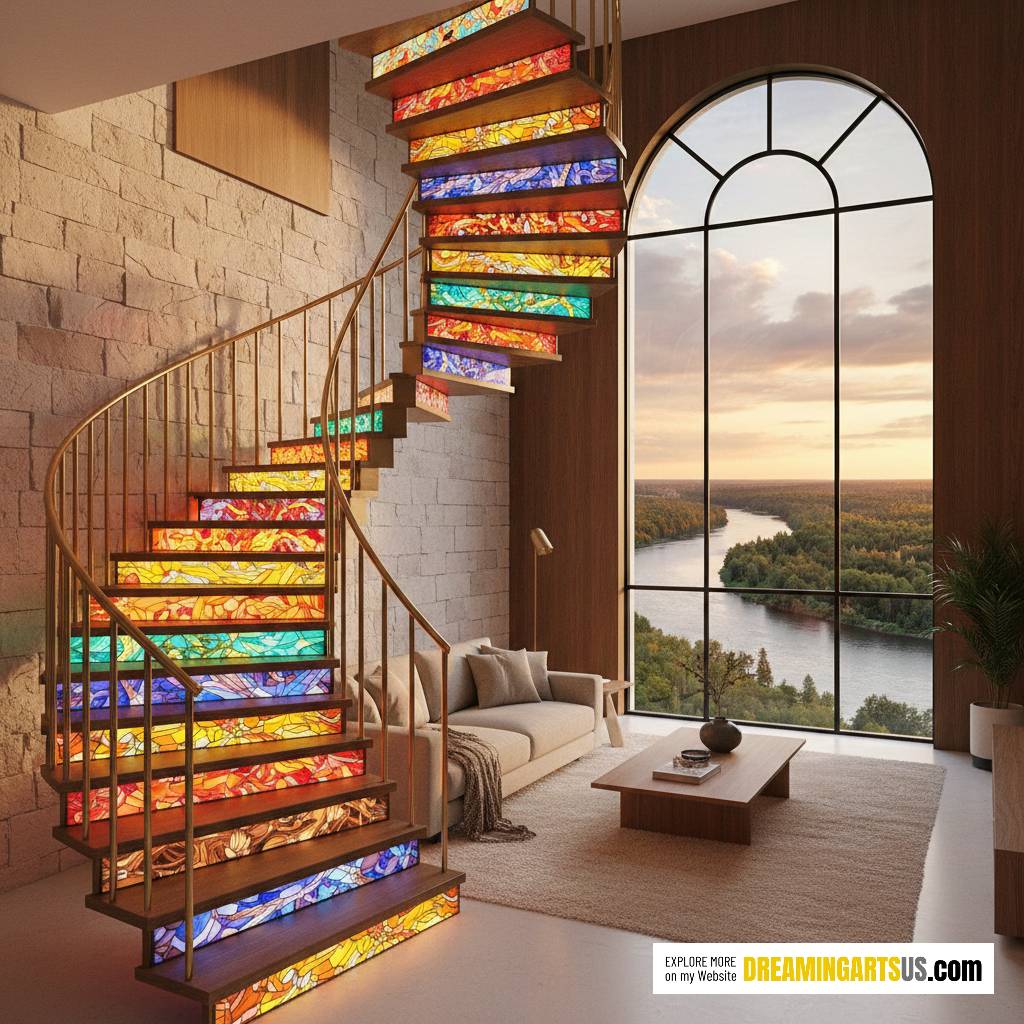
The Emotional Power Behind Stained Glass Staircases
There is something undeniably magical about stained glass. It carries a sense of history, artistry, and storytelling, yet feels surprisingly modern when applied to staircase architecture. Even in contemporary homes dominated by steel and glass, stained glass introduces warmth and soul without compromising the aesthetic.
Stained Glass Staircases do more than transport light—they influence mood. Their presence adds calm in a bedroom loft, vibrancy in an entryway, and grandeur in a living room with high ceilings. When light passes through the colored panels, the room becomes a canvas of glowing hues, shifting from cool tones in the early morning to fiery warmth in the late afternoon.
This emotional versatility makes stained glass a powerful design choice for homeowners seeking both beauty and atmosphere. Every pattern tells a story—abstract swirls, geometric mosaics, floral themes, or custom-designed imagery. The staircase becomes a form of personal expression, almost like a signature piece of art within the home.
Why Luxury Homes Are Embracing the Trend?
As design trends shift toward personalization and sculptural form, more architects are incorporating Stained Glass Staircases into luxury residential layouts. These staircases provide instant visual drama, making them ideal for double-height living rooms, panoramic lofts, mountain villas, lakeside homes, and urban penthouses.
A major reason for the trend’s growth is the rise of open-concept architecture. With fewer walls, the staircase becomes a centerpiece rather than a hidden transition point. Stained glass enhances this visibility by introducing color and luminescent detail that stands out against modern materials like stone tiles, concrete floors, glass railings, and wooden beams.
Another defining factor is LED technology. Homeowners can now integrate smooth, hidden LED strips beneath each step, amplifying the stained-glass glow even after sunset. This transforms the staircase into a radiant sculpture that anchors the entire space with elegance and warmth.
Styles of Stained Glass Staircases for Modern Interiors
1. Spiraling Stained Glass Staircases
Spiral designs are some of the most breathtaking styles available. Each twist showcases a spectrum of color, making the staircase look like a floating helix of light. When sunlight streams through large windows, the entire structure becomes a glowing, sculptural ribbon suspended in the air.
These staircases work exceptionally well in open lofts, modern chalets, and homes with panoramic city views, since their circular shape naturally draws the eye upward.
2. Floating Treads with Embedded Stained Glass
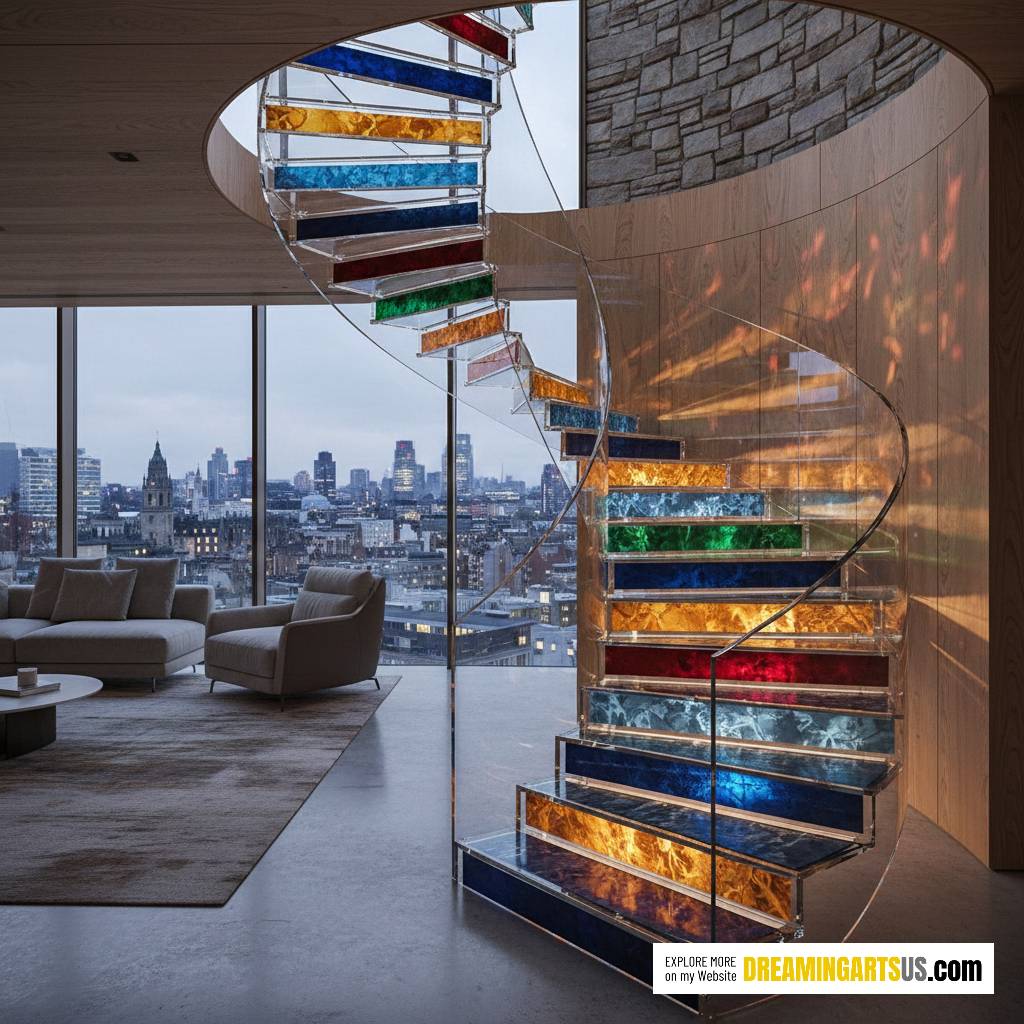
Floating staircases already have an elegant, weightless appearance, but when combined with vibrant stained glass, they take on a mesmerizing ethereal quality. Clear glass railings enhance the effect even further, ensuring nothing obstructs the play of color and light.
This style is a favorite among contemporary homeowners seeking a blend of luxury and minimalism.
3. Wood-Framed Stained Glass Staircases
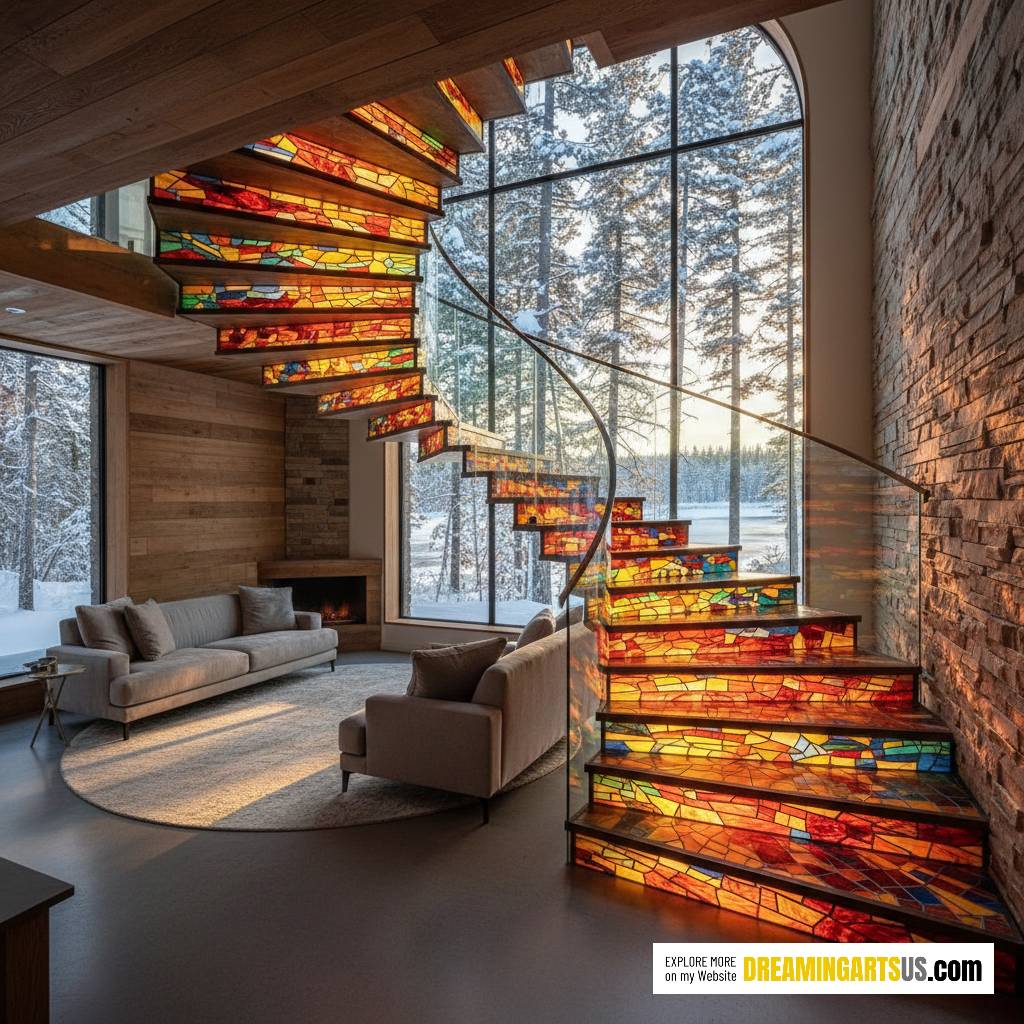
For rustic cabins, mountain lodges, and homes with natural materials, wood-framed stained glass adds warmth and sophistication. The contrast between glowing glass and natural wood grain creates a cozy yet refined atmosphere.
Designers often use earthy tones like amber, ruby, and forest green to echo outdoor landscapes visible through nearby windows.
4. Brass, Steel, and Modern Metal Finishes
If your home leans industrial or modern, metal framing offers a sleek, polished look. Brass adds opulence, black steel offers boldness, and brushed metals introduce subtle elegance.
Paired with jewel-tone stained glass, these materials create a luxurious, museum-like presence that enhances contemporary spaces beautifully.
Links to purchase similar products: Click here
Customization Options for Stained Glass Staircases
One of the most appealing aspects of stained glass is the ability to customize every detail. Homeowners can tailor their staircase to match their architectural style, color palette, and personal taste.
1. Color Palette Selection
From fiery reds to ocean blues, from tranquil greens to shimmering golds, stained glass offers limitless color combinations. You can design a staircase that reflects your home’s setting—cool tones for lakeside homes, warm tones for forest cabins, jewel tones for penthouses.
2. Pattern and Artwork Design
Popular choices include:
-
Abstract geometric patterns
-
Floral or botanical motifs
-
Landscape-inspired designs
-
Minimalist color blocks
-
Art Nouveau or Art Deco themes
Custom artwork allows homeowners to incorporate personal symbolism or meaningful imagery into the design.
3. LED Backlighting and Illumination
Integrated lighting takes Stained Glass Staircases to a new level. LEDs placed under each tread or along the sides enhance the vivid colors and create soft ambient light at night. You can even choose adjustable color temperatures or smart-home compatible lighting systems.
4. Framing Materials
Staircases can be framed using:
-
Warm natural wood
-
Clear acrylic or glass
-
Brushed steel
-
Bronze or brass
-
Stone accents
Each material shifts the overall tone of the design, letting you go from rustic to modern with ease.
Why Stained Glass Staircases Work in So Many Homes?
Many homeowners assume stained glass only suits artistic or traditional interiors, but the opposite is true. The adaptability of stained glass makes it surprisingly versatile.
In sleek penthouses, stained glass introduces warmth and emotion.
In Scandinavian cabins, it adds color and vibrancy against wood and stone.
In minimalist homes, it becomes the room’s only focal point—simple yet striking.
In rustic retreats, it enhances the intimate, nature-inspired ambiance.
Because the staircase interacts with natural light, it ties the entire architectural space together in a truly organic way.
The Light Effect: Turning Architecture Into Art
The magic of Stained Glass Staircases lies in their ability to transform any room through illumination. As light passes through the colored panels, the glow spreads across nearby walls, floors, ceilings, and furniture. These reflections create a soft-moving mural of colors that shift as the day progresses.
Morning light often brings subtle pastel tones.
Midday light heightens clarity and saturation.
Evening light produces warm golden reflections, perfect for relaxing spaces.
This living artwork effect makes the home feel more alive, more dynamic, and more emotionally connected to its inhabitants.
Placement Ideas to Maximize Visual Impact
1. Near Floor-to-Ceiling Windows
When paired with large windows, stained glass captures daylight masterfully, creating a continuously changing display throughout the day.
2. Entryways and Foyers
Your staircase becomes the first impression as soon as guests walk in. A stained-glass design turns your home into a gallery of light from the moment you open the door.
3. Open-Concept Living Rooms
Stained glass integrates beautifully into wide, spacious living areas. The colors bounce around the room, enhancing everything from stone fireplaces to modern furniture.
4. Loft Spaces and Mezzanines
A spiral stained-glass staircase leading up to a loft not only saves space but becomes a sculptural centerpiece that ties both levels together.
Practical Considerations Before Installing Stained Glass Staircases
Even though stained glass may look delicate, modern designs are highly durable. Still, there are practical factors to consider before installation.
1. Safety and Structural Strength
Stair treads must meet load-bearing requirements. Designers typically use reinforced laminated glass or acrylic layers around the stained section to ensure strength and longevity.
2. Cleaning and Maintenance
Stained glass is surprisingly low-maintenance. A gentle wipe with glass cleaner or mild soap keeps colors vibrant. For LED-integrated designs, the lighting components are usually hidden and easily accessible for long-term care.
3. Cost Considerations
Because Stained Glass Staircases involve custom artistry, integrated lighting, and structural engineering, prices vary widely depending on:
-
Size and shape
-
Materials used
-
Complexity of the stained-glass design
-
Installation environment
Though it is considered a luxury feature, its visual and emotional impact often outweighs the cost.
Design Inspirations From Modern Homes
Imagine a spiral staircase wrapped in amber and ruby glass glowing like a flame inside a snowy mountain cabin. Or a modern penthouse staircase made of blue, emerald, and gold glass floating inside a double-height living room overlooking the city skyline.
Designers are experimenting with sculptural twists, multi-tone panels, frosted details, and textured glass that refracts light differently throughout the day. Some homes use all warm tones for a cozy feel, while others mix gemstones hues to create a regal, museum-like atmosphere.
The versatility ensures that each staircase feels entirely unique—no two stained-glass installations ever look the same.

Why Homeowners Love the Look of Stained Glass Staircases?
People choose stained glass for various reasons:
-
It adds warmth and beauty to modern interiors.
-
It creates a spectacle of color that elevates daily routines.
-
It transforms steps into artwork, making the home feel curated.
-
It introduces elegance without feeling overly formal.
-
It reflects personal style more vividly than any typical staircase material.
Above all, stained glass invites emotion into the home. It softens hard architectural lines and infuses the space with life, making every room feel more meaningful.
How Stained Glass Staircases Enhance Real Estate Appeal
A home featuring a stained-glass staircase immediately stands out on the market. It signals craftsmanship, style, and a level of artistry that most buyers rarely encounter. Luxury buyers in particular appreciate unique architectural features that elevate the interior environment.
A well-designed stained-glass staircase can even become the defining feature that increases perceived home value and influences buying decisions. It captures attention in photos, videos, walkthroughs, and virtual tours—something increasingly important in today’s design-conscious market.
Future Trends in Stained Glass Architectural Design
As stained glass continues making its comeback in modern interior architecture, several trends are emerging:
-
Organic mosaic patterns inspired by nature
-
Minimalist stained glass using soft gradients and subtle hues
-
Integrated smart lighting for dynamic color control
-
Acrylic and resin-based stained-glass hybrids for enhanced durability
-
Suspended floating staircases with stained-glass cores
-
Frosted and textured glass for a soft-diffused look
These innovations show that Stained Glass Staircases are far more than a fleeting trend—they are becoming a lasting symbol of expressive interior living.
Link to buy similar products: Click here
Stained Glass Staircases are a testament to how architecture can become art, and how art can shape everyday life. They bring color, emotion, elegance, and movement into the home, turning even the simplest step into an experience. Whether you prefer swirling mosaics or bold geometric panels, a stained-glass staircase creates a moment of wonder every time you walk by.
More than a functional pathway, it becomes your home’s luminous heart—glowing, breathing, and transforming light into living art.


