
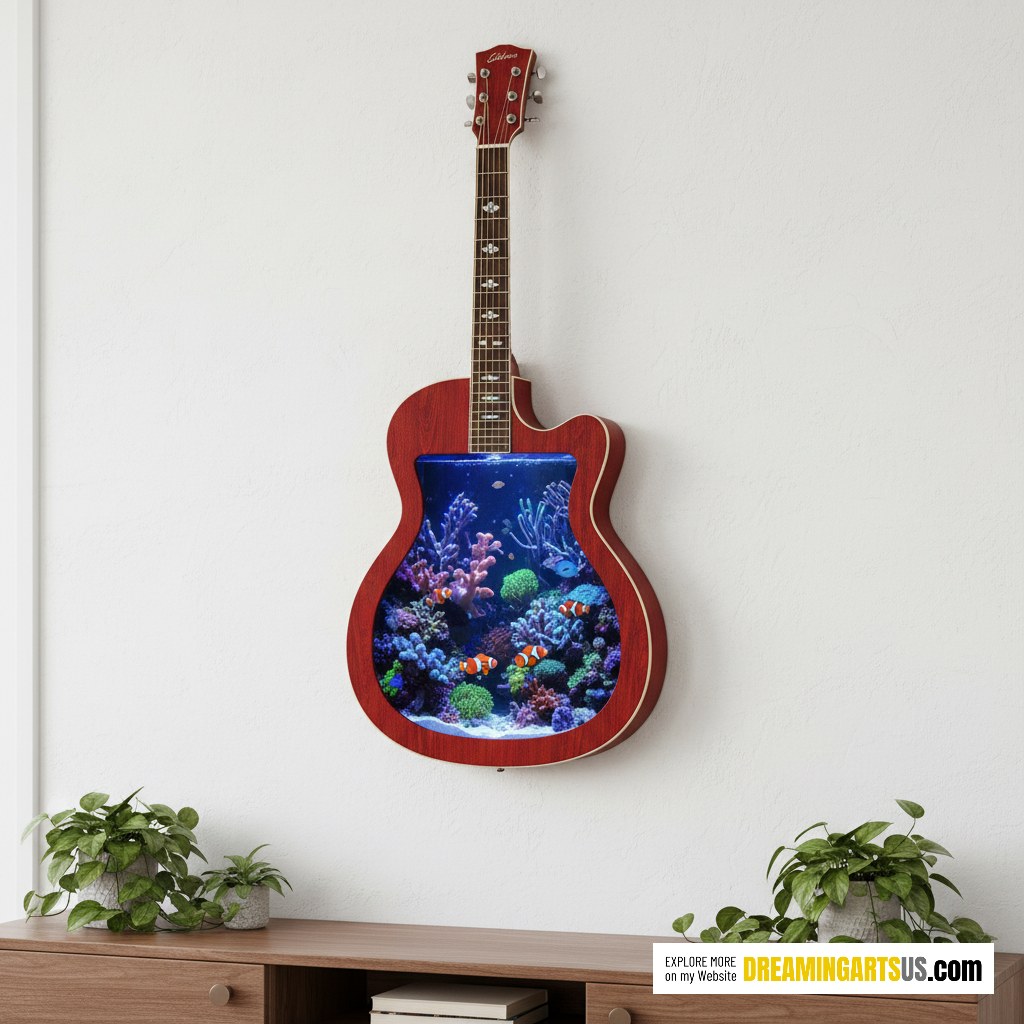
If you love music and aquariums equally, prepare to fall head-over-heels for one of the most artistic décor trends taking over modern homes—Guitar Aquariums. This visually captivating concept transforms the body of a guitar into a fully functional fish tank, merging aquatic beauty with musical charm. Whether mounted on a wall or displayed on a stand like a piece of art, these aquariums instantly become conversation starters and stylish focal points for living rooms, studios, cafés, and creative spaces.
But beyond the aesthetics, many new buyers have questions: How much do Guitar Wall Aquariums cost? What size should you choose? How hard are they to set up and maintain? Are they suitable for beginners or more experienced fish-keepers? This guide answers it all—clearly, honestly, and with helpful tips to ensure you get the most out of your aquatic guitar masterpiece.
What Are Guitar Aquariums?
Guitar Aquariums are custom-built or manufactured fish tanks created in the shape of a guitar. The design often retains the recognizable silhouette of an acoustic or electric guitar, with the internal cavity hollowed and sealed to form a high-visibility tank. The curved guitar body naturally frames the aquatic scene, giving it a gallery-style presence that resembles functional art.
They come in various designs—from rustic wooden finishes for cozy homes to LED-illuminated modern versions ideal for music rooms, bars, and luxury apartments. The combination of marine life, plants, and lighting gives a surreal effect, as if music and underwater life are harmoniously blending.
Why People Love Guitar Aquariums?
Homeowners, musicians, and aquarium lovers are obsessing over this trend for several reasons:
A Unique Decorative Centerpiece
A standard rectangular aquarium is beautiful—yes. But Guitar Wall Aquariums elevate décor into a statement. They reflect creativity, personality, and artistic taste instantly.
Perfect for Music Lovers
For guitarists, studio owners, or music educators, this is the ultimate décor upgrade. It tells a story without words.
Space-Saving Vertical Design
Because many designs are wall-mounted, they don’t consume floor space. This makes them ideal for apartments and small rooms.
Conversation Starter
Visitors can’t help but stare and ask questions—these aquariums spark curiosity, joy, and compliments.
Guitar Aquariums Cost Guide
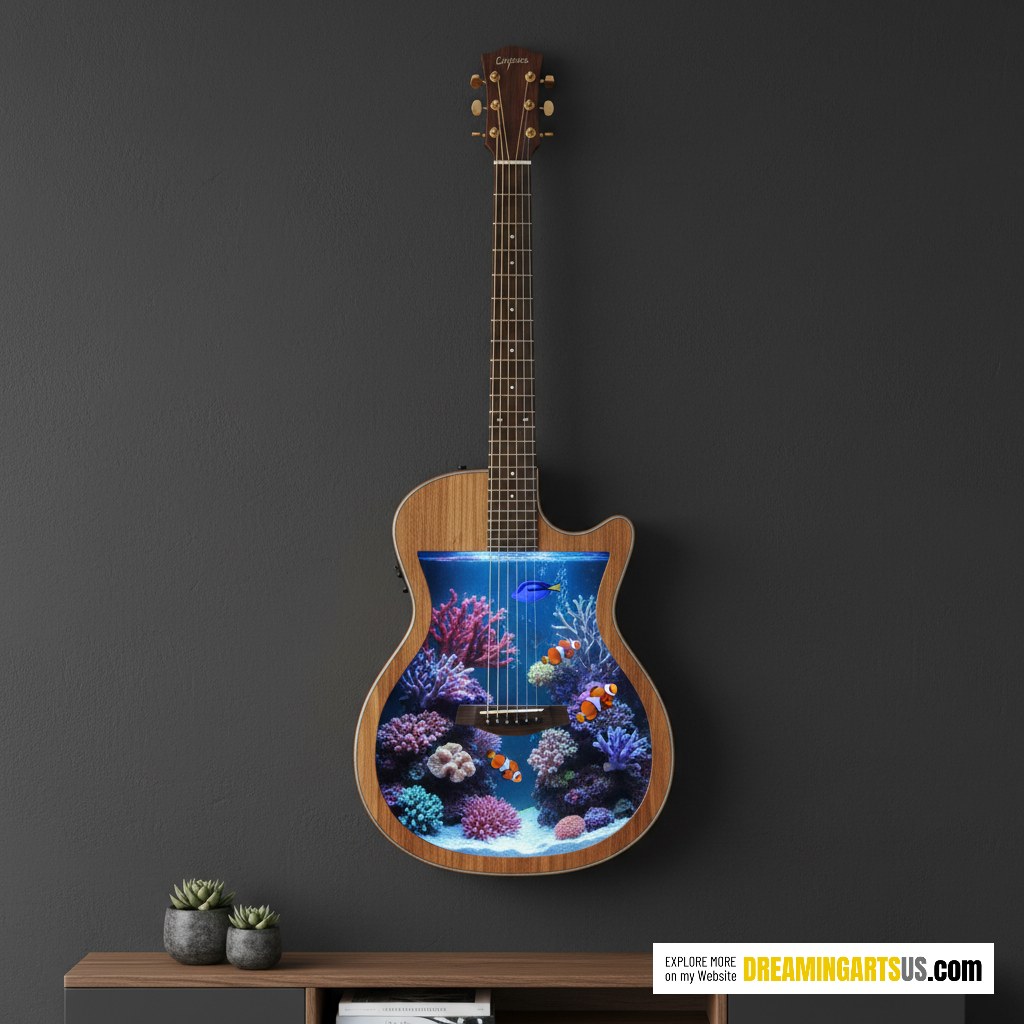
Prices vary widely depending on craftsmanship, size, materials, lighting features, and whether it’s a DIY conversion or a professionally built unit. Below is what you can generally expect:
| Type | Estimated Cost | Description |
|---|---|---|
| DIY Acoustic Guitar Aquarium | $150 – $450 | Converting an old guitar into a tank using acrylic, sealant & basic equipment |
| Small Pre-Made Wall-Mounted Models | $300 – $900 | Compact decorative units for small fish or shrimp |
| Medium Custom-Made Guitar Aquariums | $900 – $2,500 | Acrylic or glass, premium finishes, lighting & filtration included |
| Large Luxury LED-Enhanced Guitar Tanks | $2,500 – $8,000+ | Museum-style builds for luxury homes, cafés & studios |
Factors That Influence Cost
-
Tank Material – Acrylic models tend to cost more than basic glass due to clarity and durability.
-
Lighting – LED color-changing systems, built-in UV sterilizers, and night-glow features add to the price.
-
Filtration System – Internal filters are cheaper, while integrated hidden filtration systems cost more.
-
Customization – Engraving, brand logos, or themed interior décor (castle, coral reef, neon rock) increase the price.
If your goal is aesthetics with simple maintenance, mid-range models ($600–$1,500) provide the best balance.
Available Sizes of Guitar Aquariums
When choosing Guitar Wall Aquariums, size plays a huge role—not just in looks, but in fish health too. The size determines what species you can keep, how much water volume the tank holds, and how stable the ecosystem will be.
Small (1–5 Gallons)
Best for: Shrimp, small snails, bettas, or single nano fish
Ideal For: Desks, shelves, cramped rooms, gifting
Pros: Lightweight, easy to install, low maintenance
Cons: Limited fish species, requires frequent water care
Medium (5–12 Gallons)
Best for: Bettas, guppies, mollies, neon tetras, or mini aquascapes
Ideal For: Bedrooms, music rooms, offices, recording studios
Pros: More fish options, balanced size, stable water conditions
Cons: Slightly heavier, needs moderate filtration
Large (12–25+ Gallons)
Best for: Community fish, marine nano reefs, planted aquariums
Ideal For: Living rooms, cafés, studios, luxury interiors
Pros: Stunning visual impact, longer maintenance intervals, supports multiple species
Cons: Requires strong wall mount or stand, higher cost
Link to buy similar products: Click here
Best Fish & Aquatic Life for Guitar Aquariums
Not every fish species is suitable. Due to the unusual shape and vertical layout, selecting fish that thrive in smaller or mid-depth aquariums is ideal.
Recommended Fish & Shrimp
-
Betta fish
-
Guppies
-
Neon tetras
-
Zebra danios
-
Clownfish (for saltwater models)
-
Cherry shrimp
-
Amano shrimp
-
Nerite snails
Avoid
-
Goldfish (too messy for small tanks)
-
Large cichlids (aggressive, require space)
-
Plecos (grow too large)
If you’re designing a reef version, small clownfish, gobies, and cardinalfish are stunning options.

Setup Guide for Guitar Wall Aquariums
Setting up these aquariums is exciting, but precision matters. Here’s a practical, simplified step-by-step guide:
1. Choose Placement Carefully
Select a spot away from direct sunlight, strong vibrations, or heat sources. Wall-mounted tanks must be secured to studs for safety.
2. Install Filtration & Lighting First
Before adding water, set up the internal or hidden filtration, pumps, and LED lighting. Many models have concealed wiring to maintain aesthetic appeal.
3. Add Substrate & Hardscape
Place gravel, sand, or aquasoil first. Then decorate with rocks, coral, driftwood, or theme pieces such as shipwreck ornaments or guitar-themed accessories.
4. Fill the Tank Slowly
Use conditioned water to avoid chlorine contamination. Slow filling prevents substrate disturbance.
5. Cycle the Aquarium
Let the aquarium run for 5–7 days before adding any fish. This step builds beneficial bacteria and keeps your fish safe.
6. Introduce Plants or Corals
Live plants enhance water quality for freshwater setups. For marine Guitar Aquariums, choose beginner-friendly corals like Zoanthids or mushrooms.
7. Add Fish Gradually
Introduce fish only after ammonia and nitrite levels reach zero.
Maintenance Tips for Guitar Aquariums
These aquariums are relatively simple to maintain as long as consistency is your priority.
Weekly Maintenance
-
Replace 15–20% of the water
-
Check filter performance
-
Clean algae from interior glass
-
Remove uneaten food
Monthly Maintenance
-
Clean filter media (rinse, don’t replace unless necessary)
-
Trim live plants
-
Check silicone and seals
LED-Lit Models Care Tips
-
Avoid exposing lights to moisture
-
Reduce brightness at night to mimic natural cycles
Pro Tip: Use magnetic algae scrapers designed for curved acrylic surfaces to avoid scratches.
Design & Aesthetic Inspiration Ideas
If you want Guitar Wall Aquariums that truly stand out, here are creative design concepts:
| Concept Theme | Visual Style |
|---|---|
| Rock & Roll Reef | Neon corals, glowing gravel & LED lighting |
| Vintage Acoustic | Rustic wood, natural plants & warm yellow lighting |
| Music Studio Look | Wall-mounted with spotlights & sound-wave décor |
| Children’s Music Room | Bright gravel, cartoon fish ornaments |
| Luxury Penthouse | Edge-lit acrylic, castle reef, nano marine fish |
Freshwater vs. Saltwater Guitar Aquariums
Freshwater
-
Easier to maintain
-
Cheaper setup
-
Great for beginners
Saltwater
-
Visually stunning
-
Colorful marine fish and coral
-
Requires more equipment and care
If you’re new to fish-keeping, begin with freshwater and upgrade later once experienced.

Frequently Asked Questions About Guitar Aquariums
1. Are Guitar Aquariums difficult to maintain compared to traditional tanks?
Not at all. Guitar Aquariums generally require similar maintenance to standard aquariums of the same size. The only difference is the shape, which may slightly affect cleaning access. As long as you perform regular water changes, monitor water parameters, and clean algae weekly, upkeep is simple. Models with removable front panels make maintenance even easier.
2. Can beginners own and maintain Guitar Aquariums?
Yes—beginners can absolutely enjoy Guitar Aquariums. Small freshwater setups with hardy fish (such as bettas or guppies) are especially beginner-friendly. Opt for a pre-built model rather than DIY to avoid sealing or installation mistakes. Start with freshwater, then move to saltwater once you gain confidence.
3. Do Guitar Aquariums come with built-in filtration and lighting?
Most reputable pre-built Guitar Wall Aquariums include integrated lighting and filtration, neatly concealed to preserve the guitar shape. Some models allow upgrading to advanced LED systems, UV sterilizers, or low-noise filters. When buying, check whether the package includes the essentials or if equipment must be purchased separately.
4. Can I customize the design, color, and theme of my Aquarium Guitar?
Yes, customization is one of the most exciting parts of owning Guitar Aquariums. You can choose from wood finishes, color themes, LED lighting styles, aquatic décor, musical elements inside the tank, or even engrave your name or band logo. Custom builders offer fully personalized designs to match music rooms, studios, or home décor aesthetics.
5. How many fish can I keep inside a Guitar Aquarium?
This depends on the aquarium’s water capacity. As a general rule:
-
1–5 gallons: 1 betta or shrimp/snail-only setup
-
6–10 gallons: Up to 6–8 small community fish
-
12–20+ gallons: Mixed species nano community setups
Never overstock, as the guitar design—while artistic—does not provide large swimming room compared to rectangular tanks.
6. Can Guitar Aquariums support live plants or coral?
Yes. Freshwater models can host live plants such as Java Fern, Anubias, Cryptocoryne, or mosses. If set up as a saltwater system, they can support soft corals like Zoanthids, Mushroom Corals, and Xenia. Ensure the lighting matches the needs of your chosen plants or corals for healthy growth.
7. Do they leak easily due to the unusual shape?
High-quality Guitar Wall Aquariums are professionally sealed using aquarium-grade silicone or acrylic welding, making them leak-resistant and long-lasting. Cheap DIY builds or poorly sealed conversions are more likely to leak. Always check seals every 12 months to ensure ongoing safety, especially for wall-mounted models.
8. Are wall-mounted Guitar Aquariums safe? Will they fall?
If installed properly, they are very safe. Wall brackets specifically rated for heavy loads must be used. For medium or large Guitar Aquariums, always mount directly into studs, never drywall alone. Professional installation is recommended for tanks over 12 gallons to ensure long-term structural safety.
9. Do Guitar Aquariums make noise?
No—modern filtration systems are designed to run quietly, making these tanks suitable for bedrooms, offices, and recording studios. If noise occurs, it’s usually a sign of trapped air in the filter or a need for cleaning. Silent sponge or internal filters are ideal for a noise-free experience.
10. Can I convert my own guitar into an aquarium?
Yes, but it requires skill and precision. You must remove the inner structure, waterproof the frame, add acrylic panels, install ventilation for equipment, and ensure watertight sealing. A DIY conversion is rewarding but time-intensive. If you’re not experienced with aquarium construction, a pre-made model may be a safer option.
Absolutely—Guitar Wall Aquariums bring together creativity, music, and aquatic life in a visually poetic way. They elevate any space with charm, personality, and artistic beauty that few décor items can match. Whether you’re a musician, a fish enthusiast, or someone who appreciates unique home décor, this is a piece that delivers aesthetic thrill daily.
With the right size choice, proper setup, and simple weekly care, you’ll enjoy a stunning living display that feels like a blend of art, music, and nature—harmonizing right inside your home.


